
Living well at home
Preventing falls at home: what actually works
Falls are the leading cause of injury for older Australians, and many effective prevention steps are simple and low cost.
5 min read · Updated 29 July 2026
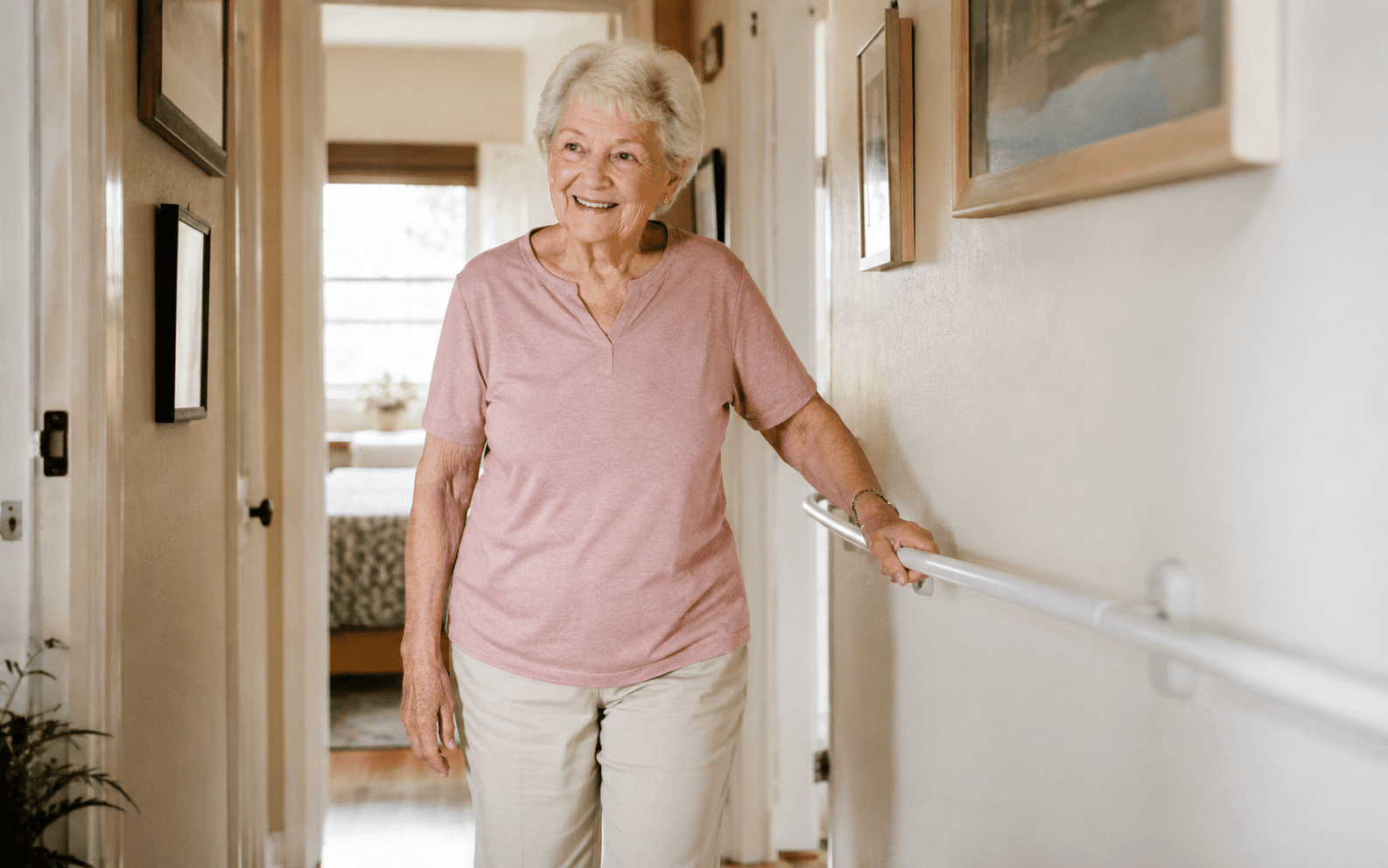
A fall is often the moment everything changes. Not because of the injury itself, but because of what follows: a hospital stay, a loss of confidence, and a decision about care made in a hurry rather than on your own terms.
Most fall prevention is not complicated or expensive. It is just rarely done until after the first fall.
Start with the floor
Most falls at home happen on flat ground, not stairs. The usual culprits are boring: loose rugs, trailing cords, clutter in walkways, and the pile of things at the bottom of the stairs waiting to go up.
- Remove or secure loose rugs and mats
- Clear walkways, particularly the route between bed and bathroom
- Tape down or reroute cords
- Fix loose floorboards, torn carpet and uneven thresholds
- Keep frequently used items within reach so you are not climbing
Light the night route
The trip from bed to bathroom at 2am is one of the most common fall scenarios there is. A plug-in sensor light in the hallway and bathroom costs very little and removes most of the risk.
The bathroom
Wet, hard and full of things to hit. Grab rails near the toilet and in the shower, a non-slip mat, and a shower stool if standing for a full shower has become tiring. Grab rails need to be properly fixed to a stud or with appropriate fixings — a towel rail is not a grab rail and will come away from the wall under load.
This can be funded
Home modifications and assistive technology are covered under Support at Home where a clinician has assessed them as necessary. An occupational therapist can do a home safety assessment and recommend what is needed.
Look at footwear
Loose slippers, socks on floorboards and worn-smooth soles cause a lot of falls. Enclosed shoes with a firm sole and a back that stays on the foot make a real difference, indoors as well as out.
The medical side
Some risk factors are not about the house at all.
- Medication side effects, particularly dizziness or drowsiness — worth a review with your GP or pharmacist, especially if you take several
- Eyesight — an annual check, and being careful with multifocals on stairs
- Blood pressure dropping when you stand up, which is common and treatable
- Feet — pain, numbness or nail problems change how you walk
Keep moving
Strength and balance decline quickly without use, and that decline is one of the biggest fall risks there is. It is also one of the most reversible. Exercise physiologists and physiotherapists can prescribe balance work that genuinely reduces falls, and both are funded as clinical services with no participant contribution.
Avoiding activity after a near miss feels sensible and makes things worse. Doing less leads to weakening, which leads to more falls.
If a fall does happen
Tell someone, even if you are not hurt. A fall you brush off is information — about your balance, your medication, or something in the house. It is much easier to act on that than on the fall that follows it.